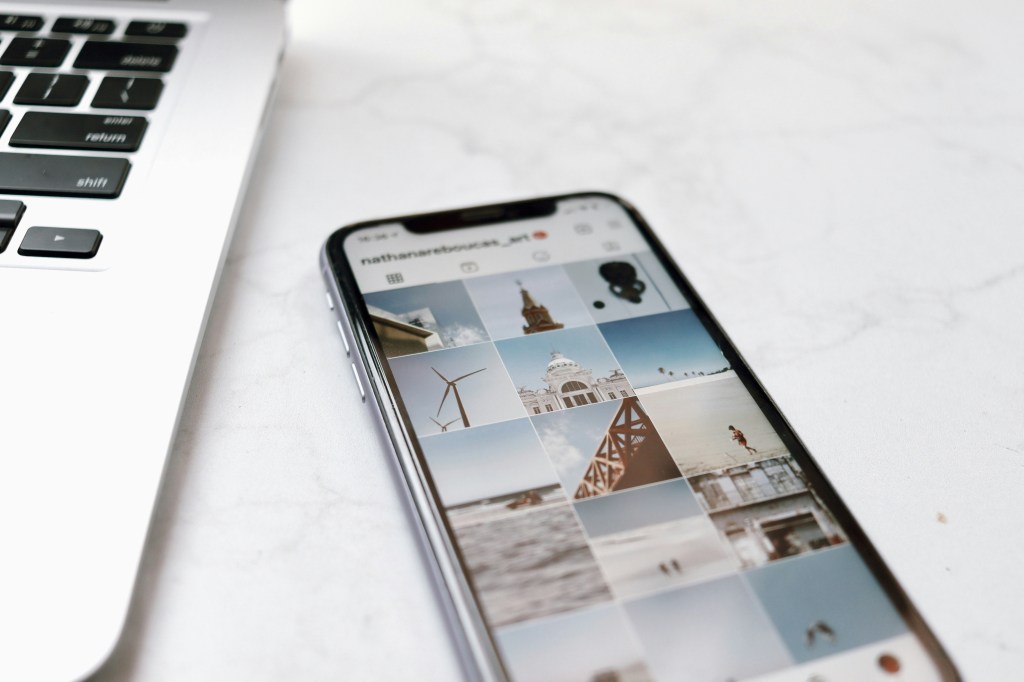
Social media was consuming me in more ways than I realized at the time. It was 2020, and with more free hours in my day, I found myself spending an average of eight hours on my phone—half of my total waking time. As research suggests, this level of digital engagement was taking a real toll on my mental health. One study, for example, shows that heavy use of digital platforms and the “brain rot” associated with it can lead to “emotional desensitization, cognitive overload, and a negative self-concept” (Yousef et al., 2025).
One day I’d had enough, so I decided to delete all social media apps – Instagram, TikTok, and Snapchat. For the first few days, it was challenging. With any second of boredom, I felt extreme agitation and a strong urge to pick up my phone and scroll. I did end up breaking my “detox” on the first three days, quickly re-downloading at least one of the apps to get a much-needed scroll session in.
Social Media Without the “Social”
Social media became more addictive in nature because it became more about consuming content and less about connecting online with people. This is noteworthy because this trend away from connection is only increasing. Now when you open Instagram, you’re taken straight to the Reels page, whereas before, the app opened to a feed of posts from people you follow.
The Science Behind Social Media Addiction
I was so addicted because social media hijacks our brain’s reward system entirely. Social media’s short-form content causes our brains to release a higher concentration of dopamine than many natural rewarding experiences (i.e., eating, spending time in nature, or having a meaningful conversation). We maintain a baseline level of dopamine, and only feel a sense of reward with a dopamine spike. What social media does is raise our baseline level, making a spike feel less rewarding (Abdaal, 2024). In order to feel a sense of reward, we demand a high concentration of dopamine — which now, with our higher base level of dopamine, is only available from sources that release a high concentration, such as social media. Thus, our brains can only feel a sense of reward from social media, causing an addiction.
The Positive Effects of My Detox
After my “relapse period” of about five days, the urgent need to redownload an app and scroll disappeared and I stayed off social media for the duration of the summer—about three months.
Over time, I was able to reset my reward system. With a lower baseline dopamine level, I could enjoy other rewarding experiences again.
I remember writing in my journal that this was one of the best decisions I had ever made. My mind felt freer—lighter. I could think more clearly, my focus returned, and I felt a newfound sense of mental clarity and freedom. It sounds dramatic, but it truly was. The changes I experienced in just three months showed me how disrupted my reward system had become because of social media.
Other activities, such as crafting, reading, and exercising, became more satisfying, where before they had seemed boring, too time-consuming or trivial.
Yes, I missed out on some cultural jokes and TikTok references. But nothing I missed online compared to the time I gained back and the mental clarity I recovered.
Now, when I open Instagram Reels, scrolling feels strange, and it’s much easier to stop because I’m no longer chasing a dopamine spike.
Cultural Awareness
Gen Z seems to be waking up to how consuming and detrimental social media is for us. A phrase circulating online—“It really is the damn phone” (Thread Media, 2024)—captures the idea that many of our modern problems stem from our relationships with our devices. Rates of loneliness, anxiety, and depression continue to rise, as explored in The Anxious Generation (Haidt, 2024).
In 2024, a group of teens in New York created The Luddite Club, a group that meets weekly to hang out intentionally without phones and to engage in offline hobbies (Kliger, 2024). Their movement has expanded to other cities, as shown on their website (The luddite club).
I encourage everyone to try at least a day without social media and see what shifts. You’ll regain meaningful time, sharpen your focus, and enjoy the little things that you had forgotten about.
References
Abdaal, A. (2024, June 18). How to Control Dopamine (You’re Destroying Your Mind). YouTube. https://www.youtube.com/watch?v=tjjqyiHczcc
Haidt, J. (2024). The Anxious Generation. Penguin Press.
Kaylin. (2025, January 8). Phone screen time addiction & usage – new survey data & statistics. Healthcare Data Management Software & Services | Harmony Healthcare IT. https://www.harmonyhit.com/phone-screen-time-statistics/#:~:text=Health%20experts%20recommend%20spending%20no,still%20double%20the%20recommended%20limit).
Kliger, H. (n.d.). Here’s why a group of NYC Teens is rejecting cellphones and social media. CBS News. https://www.cbsnews.com/newyork/news/nyc-students-no-technology-luddite-club/
The luddite club doc. THE LUDDITE CLUB. (n.d.). https://www.ludditeclubdoc.com/
Media, T., & Pearson, J. (2024, November 14). It really is that damn phone. The Gen Zer. https://thegenzer.substack.com/p/it-really-is-that-damn-phone Yousef, A. M. F., Alshamy, A., Tlili, A., & Metwally, A. H. S. (2025, March 7). Demystifying the new dilemma of brain rot in the digital era: A Review. Brain sciences. https://pmc.ncbi.nlm.nih.gov/articles/PMC11939997/
 In Common Light
Leave a comment